The saints are amazing! There is over 10,000 saints in the Catholic Church alone. There is also over 10,000 saints in the Orthodox church. With a tiny over lap between them. Protestant saints do exist. We just call them “heroes of the faith.”
I was talking with my Orthodox friend last week. I was talking to her about my patron saint for the year. I thought it was a cool Catholic tradition. Real quick… you randomly select a saint and they become your patron for the whole year. My patron of 2026 is Saint Thomas Becket and my friend picked Saint Catherine the Great Martyr (of Alexandria). But during this conversion my friend said that she didn’t know how to become a saint in Orthodoxy. She told me about a saint who was just a good mother and wife. She was sainted for this. Unfortunately, I do not remember the name of this saint.
I told my friend that I knew how to become a saint in the Catholic Church. I then smiled and said that I would look into the process for the Orthodox Church. Today I will go over how to become a saint in all the traditions. I will not be saying which way is the correct way. A saint is a saint.
Orthodox Glorification
The process of becoming a saint in the Orthodox Church is called Glorification. Unlike the more legalistic or bureaucratic "points-based" system sometimes associated with Western Christianity, Roman Catholicism, the Orthodox Church views glorification as the formal recognition of something God has already done.
Becoming a saint is like building a house. So the foundation and walls need to be built. Let’s see how the Orthodox Church glorifies their saints and builds a house. As a reminder most saints are canonized after death.
The Foundation: A Life of Holiness
The biggest thing that needs to be in a hopeful’s life is holiness. Before any formal process begins, the person must have lived a life that clearly manifested the grace of the Holy Spirit. This typically falls into one of several “categories":
Martyrs: Those who died for their faith.
Confessors: Those who suffered for the faith but did not die.
Ascetics: Monks or nuns who achieved great spiritual heights through prayer and fasting.
The Righteous: Laypeople or clergy who lived exemplary Christian lives in the world
Martyrdoms are the most common ways to become a saint. It is a huge sign of the love someone has some Jesus. Well known Orthodox martyrs are Saints Catherine the Great Martyr of Alexandria (d. 305), and George the Victory-Bearer (d. 303). There is also groups of martyrs and the most notable group is The Forty Martyrs of Sebaste (d. 320). Those martyrs were Roman soldiers that refused to sacrifice to idols.
In the Orthodox Church, a Confessor (Greek: Homologetes) is a specific title given to a saint who suffered greatly for the Christian faith—through imprisonment, torture, exile, or public humiliation—but did not die as a direct result of that persecution. While a Martyr is a "witness" through their death, a Confessor is a "witness" through their life and endurance. Here are three notable Confessor Saints Maximus the Confessor (d. 662), Mark of Ephesus (d. 1444), and Luke the Surgeon (d. 1961).
Ascetic saints (often titled The Venerable or Hosiomartyr if they were also martyred) are those who conquered the "passions" (ego, greed, lust, anger) through extreme self-discipline. The word comes from the Greek askesis, which originally referred to athletic training. An ascetic is a "spiritual athlete" who trains the soul by disciplining the body. Some notable Ascetic Saints are Saints Anthony the Great (Desert Father), Mary of Egypt (Desert Mother), Simeon Stylite, and Xenia of St. Petersburg.
Last but not least is the Righteous. Righteous Saints (titled Dikaios in Greek) are perhaps the most relatable category for the average person. While Martyrs die for the faith and Monastics flee the world, Righteous saints find their holiness in the world. They are the "everyday" saints—laypeople, married couples, and workers—who demonstrate that the path to God is open to everyone, regardless of their job or family status. Some notable saints are Saints Philaret the Merciful (d. 792), Anna the Prophetess (1st Century), and Joseph the Betrothed.
Popular Veneration
Popular Veneration is also known as the "Grassroots" Phase. This phase happens after the person dies. There are three parts of this grassroots phase. The parts are local devotion, signs of grace, and iconography. Let’s take a look at each one.
After a holy person dies, the local community begins to visit their grave, keep their memory alive, and ask for their intercession in prayer. This is the local devotion phase.
The faithful may report miracles, healings, or a sense of peace at the person's burial site. In some cases, the body is found to be incorrupt (not decaying naturally) or emitting a sweet fragrance (the "odor of sanctity"). This is the signs of grace. A few saints that are incorrupt are Saints Spyridon of Trimythous (d. 348), Alexander of Svir, and John Maximovitch (d. 1966). A few saints with a sweet fragrance are Saints Demetrios of Thessaloniki (d. 306), Nektarios of Aegina (d. 1920), and Nicholas of Myra.
Lastly, local believers may even begin painting "private" icons of the person before any official decree is made. Icons is the Orthodox Church are sometimes called “windows into heaven,” because it is also called "Theology in Color." Every part of the icon has symbolic meaning.
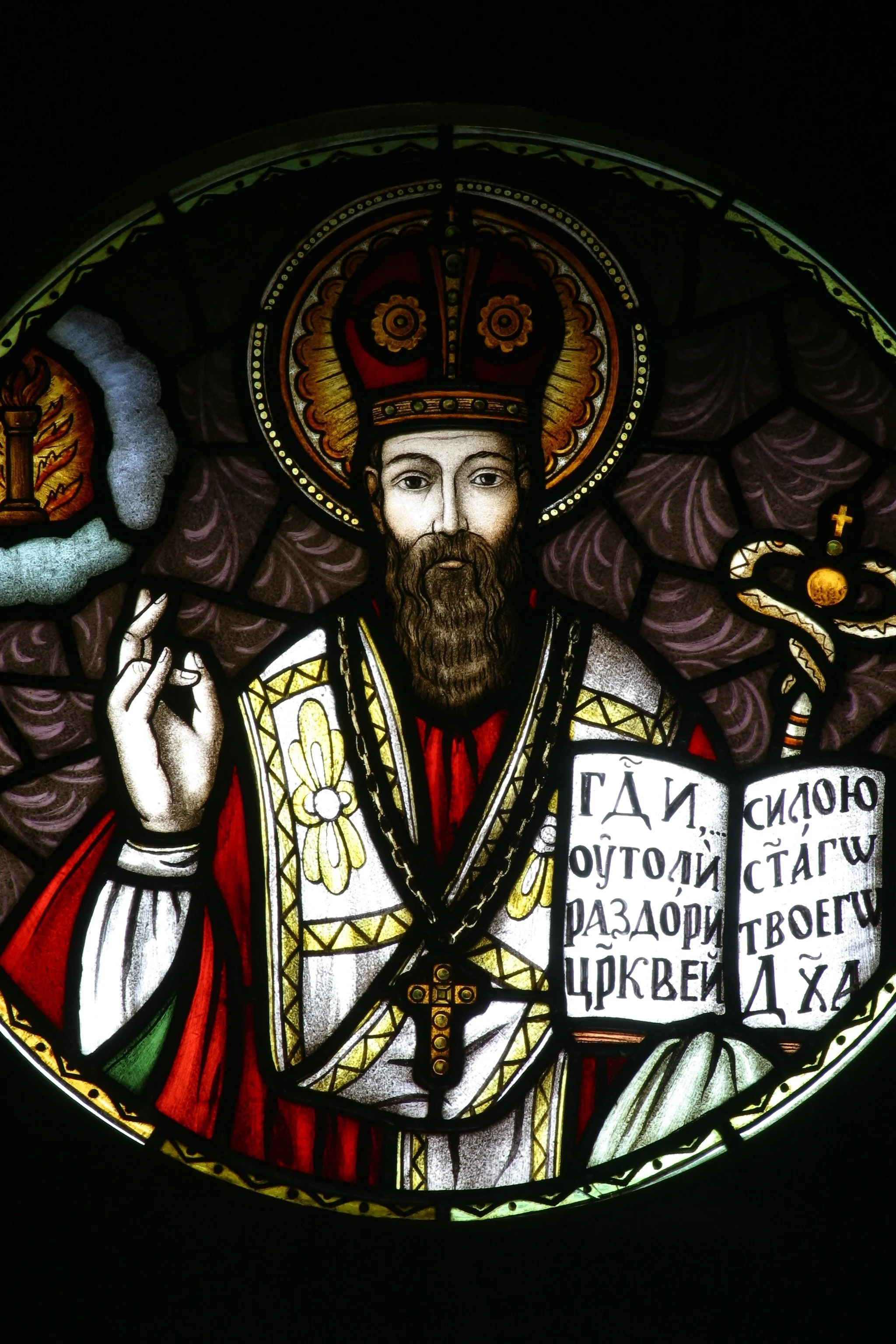
Saint Basil the Great Iconography
Let’s look at the icon of Saint Basil that I showed in my post about him.
The Hierarchical Vestments that St. Basil is depicted in is the full vestments of an Orthodox Bishop (Hierarch). The Mitre, or the ornate crown, on his head signifies his authority as a shepherd of the Church.
The Omophorion, is the wide white band with crosses draped over his shoulders, is the most important vestment of a bishop, symbolizing the "lost sheep" that Christ (the Good Shepherd) carries on His shoulders.
The Pectoral Cross, is hanging from his neck, it signifies his commitment to following Christ and his role as a witness to the Resurrection.
The Blessing Hand is his right hand. It is raised in a specific gesture where the fingers are positioned to form the Greek letters IC XC which are abbreviations for IsouS XristoS. IsouS XristoS is name of Jesus Christ in Greek. This indicates that he does not bless by his own power, but confers the blessing of Jesus Christ upon the viewer.
The open book in his left hand is the Gospel, which is the standard symbol for a Bishop or an Apostle. The inscription that the book is open too is to Slavonic text. The text on the pages is a prayer for Church unity, roughly translating to: "O Lord, by the power of Thy Holy Spirit, quell the divisions of the Churches." This reflects St. Basil's historical struggle against the Arian heresy and his lifelong work to unify the Christian world.
Over his left (our right) shoulder is the Crosier or Bishop's staff, also known as Paterissa. Unlike Western staffs that look like simple shepherd's crooks, Orthodox staffs often feature two serpents facing a cross. This references the "Bronze Serpent" raised by Moses in the desert—a symbol of Christ’s victory over death and the bishop's role in guarding the "flock" from spiritual predators.
Saint Basil has a halo. It is the circle of gold around his head. It represents the Uncreated Light of God, signifying that he is a partaker in the divine nature through holiness.
Notice his thin nose and small mouth. These symbolize a man who has silenced his physical senses to focus entirely on the spiritual.
The Investigative Process
Once popular devotion becomes widespread, the local Bishop may bring the matter to the Holy Synod (the governing council of bishops) of that specific autocephalous (independent) Church. Then two things will happen.
Committee Review: A commission is formed to investigate the person's life, ensuring their teachings were strictly Orthodox and their character was beyond reproach.
Verification: They look for proof of a "virtuous life," "miracles after death," and "continuous popular veneration." While miracles are highly valued, they are not an absolute legal requirement as they are in the Roman Catholic Church.
There is no fixed timeline or "statute of limitations" for the investigative process of glorification. Because the Church views the process as a natural recognition of God’s work rather than a legal trial, it can take anywhere from a few years to several centuries.
The Rite of Glorification
If the Holy Synod is satisfied, they issue a formal decree. The transition from "a person we pray for" to "a saint who prays for us" is marked by a specific service:
The Final Memorial: A last Panikhida (prayer for the departed) is sung for the person's soul.
The First Vigil: For the first time, hymns are sung to the saint, asking for their intercession.
The Unveiling: An icon of the new saint is brought into the center of the church for the faithful to venerate.
The Feast Day: A specific day on the Church calendar is assigned to honor them.
I will have to write a post all about veneration. All I will say right now is that veneration is not worship. It is a form of respect for what God has done through this person. The feast day is often the day the person died.
Can you become an Orthodox Saint?
In the eyes of the Orthodox Church, the answer is yes—in fact, the Church teaches that becoming a saint is the ultimate purpose of every human life. This process is called Theosis (union with God). However, "becoming a saint" has two different meanings in Orthodoxy: the spiritual reality of being with God, and the formal recognition of that reality by the Church on earth.
The Spiritual Goal: Small "s" sainthood
Theologically, anyone who enters the Kingdom of Heaven is a saint. Most saints are "unknown"—ordinary people who loved God and their neighbors in secret. To achieve this, the Church emphasizes:
Participation in the Sacraments: Regular Confession and receiving the Holy Eucharist.
The Interior Struggle: Working to heal the "passions" (pride, anger, greed) through prayer and humility.
The Life of Commandments: Following Christ's teachings in your daily interactions.
The Formal Goal: Capital "S" Sainthood
To be formally Glorified (added to the official calendar of saints), your life must serve as a public "map" for others. As we discussed earlier, this usually involves:
A "Spiritual Legacy": Leaving behind a clear example of holiness that inspires others after you die.
The Consent of the People: If you were to die today, would people spontaneously begin to ask for your prayers or visit your grave because they felt God's presence through you?
The Confirmation of God: Often marked by the "Signs of Grace" we covered, such as miracles, a sweet fragrance, or incorruptibility.
Is there a "Path" for You?
You don't have to be a monk in a cave or a martyr in an arena. You can follow the path of the Righteous Saints:
If you are married: You can become a saint through the "Martyrdom of Love"—sacrificing your ego daily for your spouse and children.
If you have a career: You can become a saint by practicing absolute honesty, kindness, and "unmercenary" service to your clients or colleagues.
If you suffer: You can become a Passion-Bearer by accepting illness or injustice without bitterness, as Christ did.
"The Holy Spirit is the same today as He was in the time of the Apostles. If we do not have the same fruits of the Spirit, it is only because we do not have the same resolve." — St. Seraphim of Sarov
Your First Step
In the Orthodox tradition, no one "decides" to become a famous saint; that would be the sin of pride. Instead, people decide to become a Christian, and sainthood is the natural (though difficult) result of that commitment. If you take away anything from this, I hope that it is that anyone can be a saint.
If you want to try to become an Orthodox saint I think you should go find a local Orthodox Church. That is because you have to be in the Orthodox Church to become an Orthodox saint. While walking the path to sainthood, remember to be free of pride. Remember to be open to God and say “yes” to His will.
Catholic Canonization
Becoming a Catholic saint is an intensive, multi-stage process that typically takes decades—or even centuries—to complete. Technically, the Catholic Church teaches that it does not "make" a saint; rather, it recognizes that a person is already in heaven and holds them up as a model for the faithful. The process, known as Canonization, is managed by the Vatican’s Dicastery for the Causes of Saints.
It does seem like a more trail progress. Which is something that we learned the Orthodox Church doesn’t like to do with their saints. So, I will say again… I am not going to say which method of “sainting” is correct. As my Orthodox friend and I like to say to each other, “A saint is a saint.”
The Four Official Stages of Sainthood
There are four stages of sainthood in the Catholic Church. The process is very scientific. That is the best way I can describe it. The stages are the following:
Servant of God
Venerable
Blessed
Saint
I will now break down the different stages. Like I did with the Orthodox process.
Servant of God
The first stage of sainthood cannot start until after five years of the person’s death. Although the Pope can waive this requirement, as was the case with Mother Teresa of Calcutta. The process starts when a local bishop opens an investigation into the person’s live. The investigation will look into the person’s life, writings, and “fame of sanctity.”
Witnesses are interviewed to determine if the candidate lived a life of “heroic virtue.” If the Vatican accepts the case, the person is give the title Servant of God. So what are the “heroic virtues” that the Tribunal is looking for?
The first things that the Tribunal will look for are theological virtues. These are considered "gifts from God" and are the foundation of a saint's relationship with the Divine. The three most important virtues of the Catholic Church are faith, hope, and charity or love.
Faith is not just believing in God, but having an unwavering public profession of faith. A saint lives as if the Gospel is the only reality, even in the face of doubt or persecution. The virtue of hope is a radical trust in God’s promises and the afterlife. This virtue is proven by a person’s ability to remain joyful and persevering during immense suffering. The “queen of all virtues” is love or charity. It involves loving God above all things and loving one’s neighbor purely for the sake of God. This is often proven by extreme self-sacrifice or service to the poor and marginalized.
There are two saints that come to my mind that show off all these virtues. The first one is Saint Maria Goretti (1890–1902) and the second one is Saint Maximilian Kolbe. I will very quickly talk about their virtues, and I will write more about them later. Those posts will show up on their feast days.
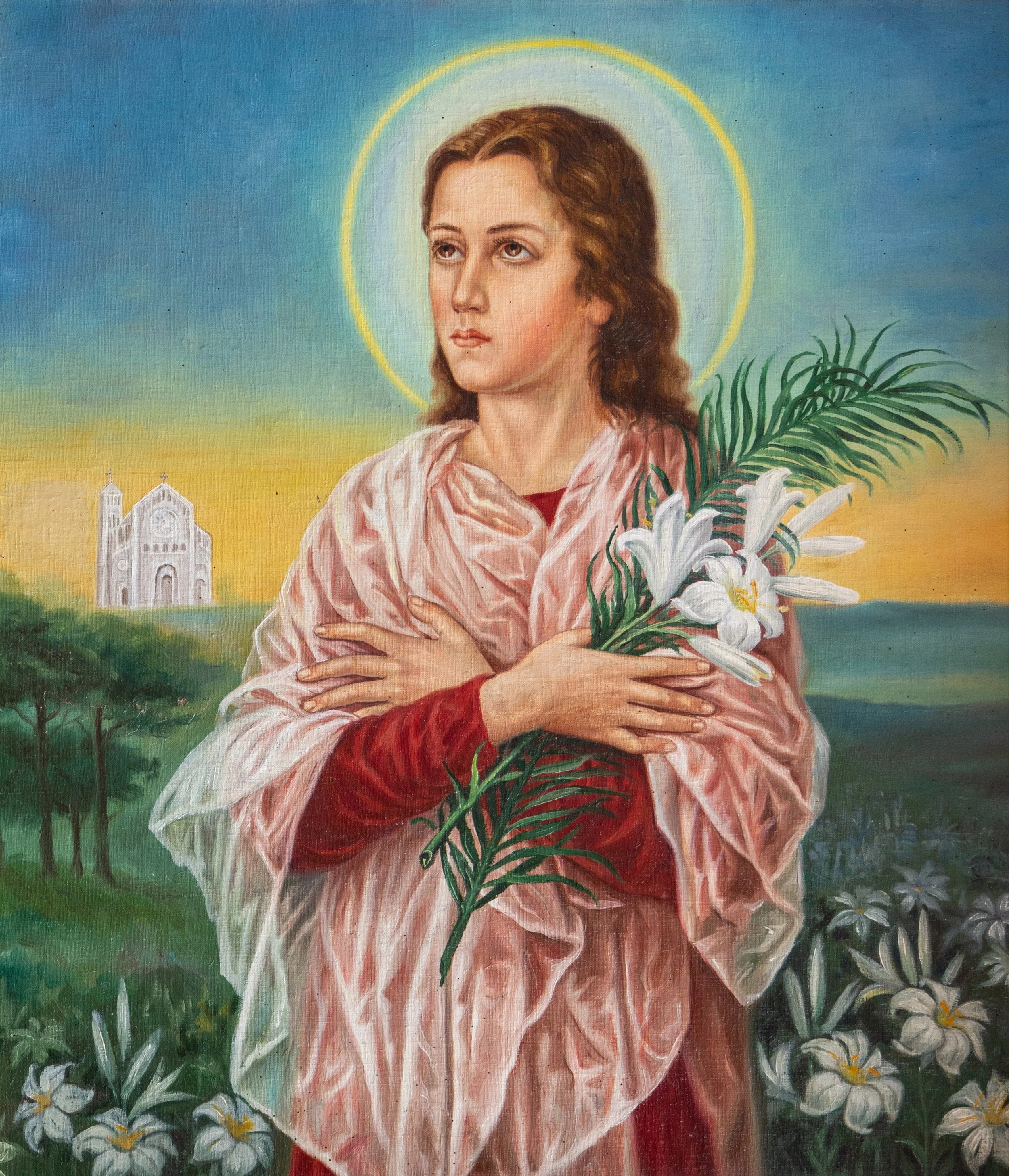
St. Maria Goretti
Saint Maria Goretti was 11 years old when was stabbed fourteen times by Alessandro Serenelli. Maria resisted Alessandro’s sexual advances.
Her stomach was ruined. If she drank water it would just spill out of her. So she offered her suffering for souls that needed saving. Doctors worked to save her life… while she was fully awake. She felt everything that the doctors were doing.
She died on the operating table. Before she died she proclaimed, “I forgive Alessandro Serenelli.”
Maria is a symbol of love unto death. As well as forgiveness and great faith. She is the patron saint of purity, youth, and victims of rape. Her Feast Day is July 6th.
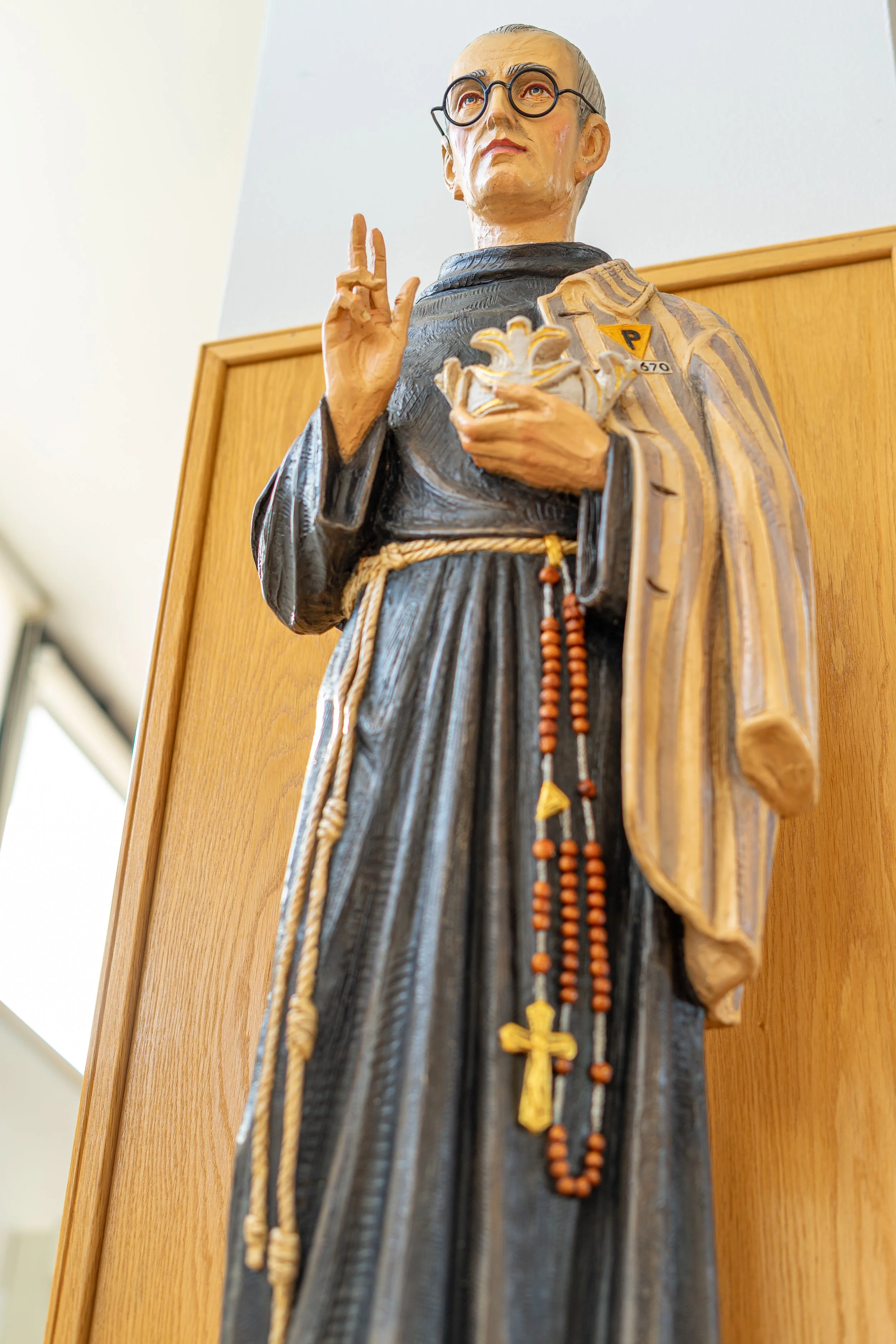
St. Maximilian Kolbe
Maximilian Kolbe a Franciscan friar and priest. He was thrown into Auschwitz for being a Christian. While in Auschwitz Maximilian took someone else’s place in a starvation bunker.
This person was stranger to Maximilian and was going to be put into this starvation bunker. But Maximilian took this person’s place in the bunker. Maximilian was put inside this bunker with nine other men, for a total of ten.
Maximilian lead them in prayer and singing for about two weeks. Maximilian was the last person to die by lethal injection.
He loved God to the point of death and loved others so greatly that he saved someone else from a horrible death. Maximilian is the patron saint of addicts, prisoners, families, journalists, the pro-life movement, and amateur radio operators. His feast day is August 14th.
Back to learning about the Servant of God stage. The Tribunal will also look for cardinal virtues. These virtues are prudence, justice, fortitude or courage, and temperance. Other considerations include poverty, chastity, and obedience to God. When the person checks off all of the books they are given the title Servant of God.
Venerable
The Venerable stage is the second stage of consideration. It is the most rigorous hurdled in the entire journey to sainthood. While it doesn’t involve the “flashy” news of a miracle, it is the phase where the Church performs its deepest “forensic audit” of a person’s soul. This might be the most trail stage of the stages of sainthood.
They look for a heroic virtue. In fact when a person is declared Venerable, the Pope is formally decreeing that this person practiced the seven virtues to a heroic degree. The virtues are faith, hope, charity (love), prudence, justice, fortitude, and temperance. This means that a cerificate of excellence is needed by the Pope. This is the Church saying, “We have checked every corner of this person's life, and they a reliable model of how to follow Christ.” Like in the cases of Saints Maria Goretti and Maximilian Kolbe.
I do have to note that there was a theological shift. The Church has decided to calling “investigating” didn’t sound good. So they changed it to “recommending” a person to sainthood. The process has not changed though.
The Venerable stage has a substage called The Document or The Positio. To get to the Venerable stage, the Postulator must compile a massive document called the Positio (often thousands of pages long). It includes a biographical certainty and a definitive account of the person's life. This means that every letter, diary entry, and speech is reviewed by theologians to ensure there is nothing contrary to Catholic faith or morals. Witnesses are asked to give testimony. Hundreds of interviews are taken from people who knew the candidate, covering both their strengths and their failures.
There is a “legal” status of the Venerable. Being Venerable" is an honorific title, but it carries specific rules within the Church. I will list the rules now.
No Public Cult: Unlike a "Blessed" or a "Saint," a Venerable cannot have a public feast day, nor can churches be named after them. You won't find their image on a church altar yet.
Private Devotion Only: You are encouraged to pray to them privately. In fact, the Church is now "waiting on God" to provide a miracle through that person’s intercession to prove they are in heaven.
The "Non-Cultu" Check: Before moving past this stage, the Church must verify that people haven't started "treating them like a saint" prematurely (no unauthorized altars or public prayers), as the Church wants to ensure the process remains objective.
I feel like I need to explain a few things. In Catholic theology, "cult" (from Latin cultus, meaning care or adoration) refers to a specific form of worship, devotion, or liturgical veneration, rather than a manipulative group. It often signifies the "cult of the saints" or Marian devotion, representing honor given to individuals, not the worship (\(latria\)) reserved for God alone. I will have to write more on the different levels of adorations in the Catholic Church, and the Orthodox Church. If the Orthodox also has different levels of adorations.
I will like to mention a few famous Venerables that you might know. There are a lot of famous figures that remain at this stage. The Church is still waiting for a miracle from them. Venerable Fulton Sheen is a famous 1950s TV archbishop. His cause was paused for years due to a legal dispute over his remains but has since moved forward. Venerable Augustus Tolton is the first African-American priest recognized as such in the U.S. Venerable Pierre Toussaint was a former slave in New York who became a famous philanthropist.
Blessed
The third stage of sainthood is called Blessed. The reach this stage, a miracle must be attributed to the candidate’s intercession after their death. Most miracles are medical healings that a panel of independent doctors deems "scientifically unexplainable." For an example a crushed foot becoming healed. Martyrs skip the Venerable stage. Once the Pope approves the miracle, the person is Beatified and called Blessed. They can now be venerated locally (in their home country or religious order). Let’s dig deeper.
The Blessed stage is the penultimate step in the canonization process. When the Church grants this title, it is a formal declaration that the person is "worthy of belief" to be in heaven and can now be invoked in public prayer. The Church is saying, “We know that you are in Heaven!” While a Venerable is recognized for how they lived on Earth, a Blessed is recognized for the power of their intercession from Heaven. I will have to write about intercession more later.
The biggest requirement is a “Divine Seal.” For most candidates, the transition from Venerable to Blessed requires one verified miracle attributed to their intercession after their death. The Church views a miracle as God’s "signature" or "seal of approval," confirming that the person is indeed with Him. There is one expectation to the miracle. Martyrs (those killed for their faith) can be beatified without a miracle. Their sacrifice itself is considered the ultimate proof of their sanctity. However, even a martyr needs a miracle to move from Blessed to Saint.
So how is a miracle verified? The Vatican uses an incredibly high bar for medical miracles, employing a panel of roughly 100 physicians (the Consulta Medica), many of whom are not Catholic. For a healing to count, it must be:
Instantaneous: The recovery happened all at once, not over weeks of therapy.
Complete: The disease or injury is totally gone.
Lasting: The person remains healthy for years afterward.
Inexplicable: Science cannot explain how it happened (e.g., a vanished Stage 4 tumor or a regrown optic nerve).
There is a ceremony of when someone is made a Blessed. The ceremony is called Beatification. Once the Pope signs the decree of a miracle, a formal Beatification Ceremony is held. Unlike a Canonization (which is almost always at St. Peter's in Rome), Beatifications often happen in the person’s home country to celebrate with the local community. What happens during the ceremony is the following… A representative of the Pope reads a letter officially declaring the person "Blessed." A large tapestry or portrait of the new "Blessed" is usually unveiled at the front of the church. The person’s remains (relics) are often processed through the church and can now be officially venerated.
So what changes when someone becomes a Blessed? The title is give and the public is allowed to venerate the Blessed. In other words a cult is allowed, but in a limited way. So the Blessed will get the following:
Feast Days: They are assigned a day on the liturgical calendar, but it is usually only celebrated in their home diocese or within their religious order.
Naming Rights: New churches or schools in that specific region can now be named after them.
Mass Prayers: Priests in that region can officially mention their name during the Mass.
Some Blessed people are well-known figures and even as early as 2026. One that stands out to me is Blessed Chiara "Luce" Badano. She was a modern Italian girl who died of bone cancer in 1990 at age 18. She is famous for her radiant joy despite intense physical pain. She refused morphine so she could stay "lucid" to offer her suffering to God. I pray for a fraction of her courage.
Saint
The canonization of someone as a saint needs a second miracle. A saint is given Global Recognition by this second miracle. This second miracle must occur after the beatification ceremony to show that the person is truly interceding for the living. The Pope presides over a formal Mass where the person is declared a Saint, allowing for universal veneration throughout the entire global Church.
Protestant Sainting
There is no method to becoming a a saint in the Protestant church, and there is so many that I have will have to pick one. I will be looking at how to become a saint in the Church of the Nazarene. Since I am a member of the Church of the Nazarene. The long and the shorty of it is that once you start to believe you become a saint. There is a Sanctification process though. You have to surrender everything to God. Then you need to live a good holy life.
There isn’t a list of saints in the Church of the Nazarene, and we would call them Heroes of the Faith. But some of the most notable heroes that I can think of are George Müller, Lottie Moon, Corrie Ten Boon, and David Livingstone. All of these people had amazing faith.
On a personal note… I did this on last Sunday. I gave everything to the Lord. As far as the Nazarene Church says, I am a saint. But there is still a lot of work to do.
References
Orthodox
Official Guidelines and Procedures
The Glorification of Saints (Orthodox Church in America): The official explanation of the criteria and the liturgical process for canonization in North America.
The Synodal Commission for Canonization (Ecumenical Patriarchate): Documents regarding the procedures followed by the Mother Church in Constantinople, which handles many modern glorifications (like those of St. Paisios and St. Porphyrios).
The Code of Canon Law (Pedalion/The Rudder): While focused on broader Church law, it contains the foundational principles regarding the veneration of martyrs and the authenticity of relics.
Primary Hagiographies (The "Lives of the Saints")
The Prologue of Ohrid (St. Nikolai Velimirovich): A daily devotional that includes brief lives of the saints and hymns of praise. It is widely considered the most accessible entry point for understanding "Saintly" character.
The Synaxarion (Hieromonk Makarios of Simonos Petra): A multi-volume, scholarly work that provides the most detailed modern accounts of the saints' lives used in the daily liturgical cycle.
The Great Collection of the Lives of the Saints (St. Demetrius of Rostov): A classic, 12-volume spiritual masterpiece that serves as the standard historical reference for the Eastern Orthodox world.
Theological and Academic Works
"The Living Icon" (Various Authors): Academic essays exploring the theology behind icons and why the Church "recognizes" rather than "creates" a saint.
The Akathist Hymns: These are liturgical poems dedicated to specific saints. Reviewing an Akathist for a recently glorified saint (like St. John Maximovitch) reveals how the Church describes their path to holiness.
The Mountain of Silence (Kyriacos Markides): While more of a narrative, it provides a deep look at the "Elder" system in Orthodoxy, which is often the precursor to sainthood.
Catholic
Primary Vatican Documents
These are the legal "rulebooks" that govern every step from Servant of God to Saint:
Divinus Perfectionis Magister (1983): The Apostolic Constitution issued by Pope John Paul II. This is the foundational law for the modern process, which streamlined the investigation and created the "College of Relators."
Normae Servandae (1983): Detailed technical norms issued by the Vatican to explain exactly how bishops should conduct diocesan inquiries into lives and miracles.
Sanctorum Mater (2007): An instruction manual for local bishops that clarifies the "preliminary" phase of a cause (how to handle the Servant of God stage).
Maiorem Hac Dilectionem (2017): A Motu Proprio by Pope Francis that added the third path to sainthood: The Offering of Life.
Official Church Bodies
Dicastery for the Causes of Saints: The official Vatican department (formerly a "Congregation") that manages all causes globally. Their website contains the most up-to-date decrees on new Blesseds and Saints.
USCCB - Saints & Canonization: The United States Conference of Catholic Bishops provides a simplified breakdown of the process and a list of American saints-in-waiting.
Reference Works & Databases
Hagiography Circle (The Index of Saints): An extensive, independently maintained database that tracks every active cause for sainthood in the world, including current "Servants of God" and "Venerables."
The Catholic Encyclopedia (New Advent): While older, its entry on "Beatification and Canonization" provides an excellent deep-dive into the historical "Devil's Advocate" role and the evolution of the process from the early Church to the 20th century.
Modern Scholarly Summaries
Catholic Answers: How Does Someone Become a Saint?: A helpful resource for understanding the theological difference between "praying to" a saint vs. "worshipping" God.
National Catholic Register - Step-by-Step Guide: A detailed journalistic overview of the medical boards and the "Consultors" who vote on miracles.
Church of the Nazarene
The Church Manual. In the Preamble and Articles of Faith, the Church of the Nazarene uses "saints" to refer to the body of all believers throughout history.
